
Pre-Roll Production Equipment: From Filling to Infusion
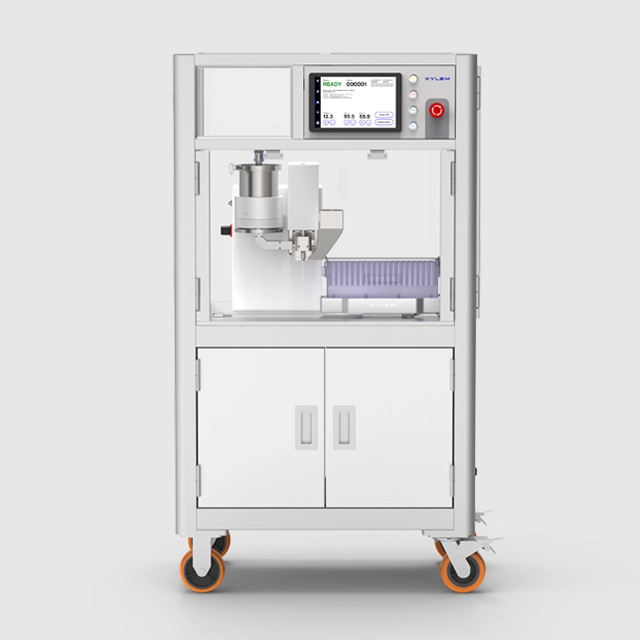
Pre-roll production runs in four stages: grinding, cone filling, infusion, and closing and packaging. Cone fillers range from manual knockboxes to automated packers, and infusion equipment turns standard pre-rolls into hash holes and donut joints. For infused lines, infusion is usually the step worth automating first because it combines the most hands-on time with the most expensive input. The Xylem Y2 Pre-Roll Infusion System infuses 500–700 pre-rolls per hour at temperatures as low as 35°C, with pricing from $45,000.
What are the stages of pre-roll production?
Each stage has a manual method and an automated option. The slowest stage sets the output of the whole line, so map all four before buying equipment for one.
| Stage | Manual method | Automated option |
|---|---|---|
| Grinding | Hand grinders or small batch grinders | Commercial grinders sized to the filler’s output |
| Cone filling | Hand packing one cone at a time | Knockbox-style fillers and automated cone packers that fill a full tray per cycle |
| Infusion | Dosing concentrate by hand with a syringe | Automated infusion systems such as the Xylem Y2 that dose each pre-roll at a set temperature and volume |
| Coating | Rolling pre-rolls in kief or powder by hand | Automated coating machines |
| Closing and packaging | Twisting or folding closures by hand, then tubing and labeling | Closers and packaging equipment matched to the closure style |

How does cone filling fit into an infused pre-roll line?
Cone fillers work in batches. An operator loads ground flower and empty cones into a tray, the machine vibrates or spins the material into the cones, and the tray is unloaded for closing. Options range from manual knockbox-style fillers that pack about 100 to 300 cones per cycle to automated packers rated in the thousands per hour.
Filling, though, only produces a standard pre-roll. For infused products, the filled cone still has to be dosed with concentrate, and that step is slower, more skilled, and handles a far more expensive input than flower. A fast cone filler feeding a manual infusion bench simply moves the bottleneck downstream.
That is why infused pre-roll lines are usually planned around infusion capacity. Size the cone filler to keep the Xylem Y2 supplied, not the other way around. Per-cycle filler ratings also exclude loading, unloading, and closing, so measure filler output across a full shift before matching it to infusion.
What is the difference between manual and automated infusion?
Manual infusion relies on an operator to warm the concentrate, place the needle, and dose each pre-roll. Results vary with the operator, the concentrate temperature, and fatigue over a shift, and the process is hard to scale without adding people.
Automated infusion holds the concentrate at a set temperature and doses a programmed amount into each pre-roll. Here is how manual dosing compares with the Xylem Y2:
| Factor | Manual infusion | Xylem Y2 |
|---|---|---|
| Throughput | Depends on the operator | 500–700 pre-rolls per hour |
| Dose control | Operator-dependent | Pump precision of ±1% |
| Temperature | Varies with how the concentrate is warmed | 35°C–95°C, controlled; pressurized tank with a ceramic displacement pump for low-temperature gels |
| Formats | Limited by operator skill | Hash holes and donut joints; paper cones, straight rolled tubes, glass tips, and blunt wraps |
| Sizes | Any, but inconsistent | 40–120 mm, 0.4–2 g, with custom trays for other shapes |
| Staffing | Grows with volume | Usually one operator |
| Cleaning | Manual wipe-down of tools | GMP ready; disinfected with elevated temperature and ethanol or isopropanol pumped through the system |
At 500–700 pre-rolls per hour, one Y2 produces about 4,000–5,600 infused pre-rolls in an eight-hour shift of continuous running. Plan for breaks, changeovers, and cleaning when setting a daily target.
Why does infusion temperature matter?
Concentrates flow more easily when heated, but heat drives off terpenes and can change flavor and aroma. Live resin and rosin are the most sensitive. The lower an infusion system can run while still dosing accurately, the more of the concentrate’s profile reaches the finished pre-roll.
The Y2 runs as low as 35°C. It uses a pressurized resin tank and a ceramic displacement pump designed for low-temperature gels, so it can move viscous concentrates without heating them more than necessary. Its resin-contact parts are 316 stainless steel and ceramic. Xylem’s guide to safely heating resin, rosin, and distillate covers temperature handling by concentrate type.
Which concentrates can be infused automatically?
The Y2 is built for liquid resins, including:
- Live resin and live rosin
- Batter, liquid diamonds, and rosin jelly
- Partially decarbed rosin
- Delta-9 and delta-8 distillate
It also supports modifiable resin deposit shapes, which lets brands adjust how the concentrate sits in the pre-roll and how it burns. For a full breakdown of formats and specs, see how the Y2 pre-roll infusion system works.
How do you evaluate a pre-roll infusion system?
Throughput headlines are easy to compare, but they rarely decide whether an infusion system works for live resin, rosin, or GMP production. Score every system on the criteria below, using published specifications rather than sales claims.
| Criterion | Why it matters | Xylem Y2 published spec |
|---|---|---|
| Lowest operating temperature | Lower temperatures protect terpenes in live resin and rosin | 35°C |
| Dose precision | Consistent dosing keeps potency results and label claims on target | ±1% pump precision |
| Resin-contact materials | Documented materials simplify quality review and cleaning validation | 316 stainless steel, ceramic |
| Pre-roll formats | One system across product lines avoids buying a machine per format | Paper cones, straight rolled tubes, glass tips, blunt wraps |
| Infusion styles | Determines which infused SKUs you can launch | Hash holes and donut joints, with modifiable deposit shapes |
| Concentrate range | Thick and partially decarbed resins need the right pump | Live resin, rosin, batter, liquid diamonds, rosin jelly, D9, D8 |
| GMP and cleanroom readiness | Required for regulated and pharmaceutical-style production | GMP ready; ISO 9 or above environments |
| Throughput on sensitive concentrates | Rates on distillate overstate output on rosin and live resin | 500–700 units per hour |
| Published price and lead time | Lets you budget and schedule without a sales cycle | From $45,000; 2–3 week lead time |
Ask every vendor for the same nine data points. When a system publishes a high throughput figure, confirm which concentrate it was measured on; some infusion systems advertise their top speed on distillate and a lower rate on rosin. Then run your own most temperature-sensitive concentrate in a demo.
What infused pre-roll formats can you produce?
Infusion equipment determines which infused products you can make consistently:
- Hash holes: a column of concentrate runs through the center of the pre-roll. The concentrate burns slowly along the length of the joint, so placement and dose consistency matter for an even burn.
- Donut joints: concentrate forms a ring inside the pre-roll rather than a single center column, changing how it burns.
- Coated pre-rolls: concentrate or kief on the outside of the pre-roll. This is a separate coating step, not an infusion step.

The Y2 produces both hash holes and donut joints, and its adjustable deposit shapes let brands develop their own variations. Because it handles cones, straight rolled tubes, glass tips, and blunt wraps, one system can cover several product lines instead of one machine per format. Straight pre-rolls are held by clamp trays on the sides to avoid deforming the paper.
How does automated infusion improve quality control?
Infused pre-rolls are tested for potency, and inconsistent dosing shows up as batch-to-batch variation in lab results. When dose depends on an operator’s hand, the spread between the lightest and heaviest pre-roll in a batch grows over a shift.
An automated system narrows that spread. The Y2’s ±1% pump precision means each pre-roll receives close to the programmed amount, which makes potency targets easier to hit and label claims easier to support. To verify it in your own production:
- Weigh a sample of pre-rolls before and after infusion at the start, middle, and end of each run
- Record concentrate batch, temperature, and machine settings with each lot
- Compare lab potency results across lots to confirm consistency over time
Clean-in-place matters for quality as well. The Y2’s sealed stainless steel and ceramic fluid path, safety enclosure, and temperature-plus-solvent disinfection support GMP procedures and use in ISO 9 or cleaner environments. Seals and needles are off-the-shelf consumables, which keeps maintenance simple.
What should you automate first?
For brands making infused pre-rolls, automate infusion first. It is the step where the most expensive input, concentrate, meets the most operator-dependent process. Every dosing error costs concentrate, shifts potency results, and risks rework, and those losses grow with volume.
- Infused pre-rolls are a growing share of sales: start with the Y2. It replaces hand dosing with controlled temperature and ±1% pump precision, usually with one operator.
- Infusion is automated and filling now limits output: add or upgrade cone filling capacity to keep the Y2 supplied.
- Both are balanced: address closing and packaging next, matched to the combined output.
Operations that only make standard, non-infused pre-rolls can start with cone filling, but most brands add infused SKUs as they grow. Planning the line around infusion capacity from the start avoids rebuilding it later.
How do you choose equipment by operation size?
| Operation | Cone filling | Infusion |
|---|---|---|
| Small or craft | Knockbox-style batch filler | Manual dosing, or one Y2 once infused SKUs become a core product |
| Growing | Automated cone packer | One Y2, about 4,000–5,600 infused pre-rolls per shift |
| High volume | High-capacity packers or multiple fillers | Multiple Y2 systems matched to filler output |
The Y2 needs a 5 ft × 5 ft working space, 120V/10A power, and compressed air at 70–80 psi (2.3 CFM), so it fits in most existing production rooms. For background on pre-roll styles and materials, see the universe of pre-roll styles.
What should you test in a pre-roll equipment demo?
- Run your own flower grind, cones, and concentrate
- Test each pre-roll size and closure style you sell: open, twist, or Dutch crown
- Weigh infused pre-rolls to confirm dose consistency across the run
- Run your most temperature-sensitive concentrate at the lowest workable temperature
- Time a full cycle, including loading, unloading, and cleaning
- Confirm installation, training, and service support
See full specs on the Y2 Pre-Roll Infusion System page, or watch how it loads, infuses, and unloads in how the Y2 works.